
Storage Unit Checklist for a Smooth Home Move
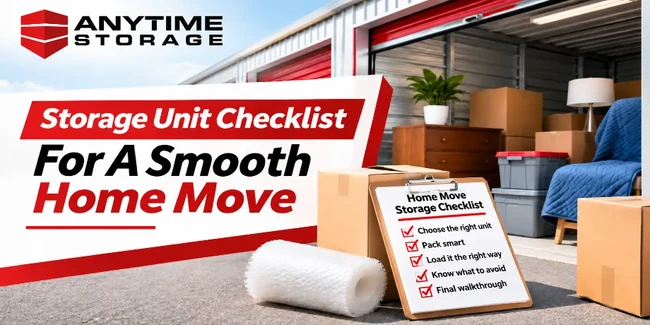
What this guide covers:
- Choosing the right storage unit size and type
- Packing your unit the smart way
- Loading your unit the smart way
- What you can and cannot store
- Final walkthrough checklist before moving day
- FAQs on sizing, climate control, and access
A little planning before moving day can save hours of frustration once boxes start piling up. This checklist walks through picking the right storage unit, packing it correctly, and loading it so everything stays organized and protected until you need it again.
Before Moving Day: Pick the Right Storage Unit
Choose the Right Unit Size
Match the unit to what you are actually moving, not just a rough guess. A studio or one-bedroom apartment typically fits in a 5x10 or 10x10 unit, while a three- or four-bedroom house usually needs a 10x20 or larger. Still not sure what size you need? Our online size guide can help you select the right size. When in doubt, a facility team member can walk through your inventory and recommend a size.
Decide Between Climate-Controlled and Standard Storage
Wood furniture, electronics, photographs, and important documents hold up better in a climate-controlled unit, especially if your move spans the hottest months of the year. Standard units work fine for boxes, tools, and furniture that can handle normal temperature swings.
Reserve Your Unit in Advance
Reserve your unit a few weeks ahead of your move date, particularly during summer, when storage demand runs highest. Reserving early also gives you time to confirm access hours and gate codes before moving day.
Find A Storage Location Near YouPacking Checklist for Storage
Gather the Right Supplies
Stock up on sturdy boxes in a few sizes, packing tape, bubble wrap or packing paper, and furniture covers before you start. Mismatched or worn-out boxes are one of the most common reasons items shift or get damaged in transit.
Label Every Box
Write the room and a short contents summary on at least two sides of each box. This one habit makes both loading the unit and finding things later far faster.
Take Inventory of What You Are Storing
Keep a simple list, even a photo of each box's label, of what goes into the unit. Six months from now, a quick inventory beats trying to remember what is in the back corner.
Loading Your Storage Unit the Right Way
Load Heavy Items First
Put dressers, appliances, and boxes of books along the back and bottom of the unit. Lighter, more fragile items go on top and toward the front, where they are easier to reach.
Leave a Path to the Back
Stack boxes and furniture along the sides and leave a narrow path down the middle of the unit. You will thank yourself the next time you need something from the back without unloading half the unit.
Protect Furniture and Electronics
Cover upholstered furniture and mattresses with breathable covers rather than plastic, which can trap condensation. Wrap electronics in their original boxes when possible, or use bubble wrap and a snug-fitting box.
What Not to Store in a Storage Unit
A few categories do not belong in any storage unit, for safety and facility policy reasons:
- Perishable food or anything that can spoil or attract insects.
- Flammable liquids, propane tanks, or other hazardous materials.
- Live plants or animals.
- Firearms and ammunition, unless your facility specifically permits secured storage.
Check with your local facility for a full list of restricted items before you load anything questionable.
Final Walkthrough Checklist
- Unit size confirmed and reserved.
- Packing supplies gathered.
- Every box labeled with room and contents.
- Inventory list saved somewhere you can find it later.
- Heavy items loaded first, fragile items on top.
- A path left down the middle of the unit.
- Furniture and electronics wrapped and protected.
- Lock secured and gate code or access hours confirmed.
Reserve Your Storage Unit With Anytime Storage
A smooth move starts with the right unit and a plan for what goes where. Find your nearest storage location to check current unit sizes, availability, and starting rates before moving day arrives.