
Short-Term vs Long-Term Storage: Which Do You Need?
What this guide covers:
- Short-term storage: definition and best use cases
- Long-term storage: definition and best use cases
- Short-term vs. long-term storage comparison table
- Lease terms and pricing differences
- Tips for choosing the right option for your timeline
- FAQs on switching, sizing, and climate control
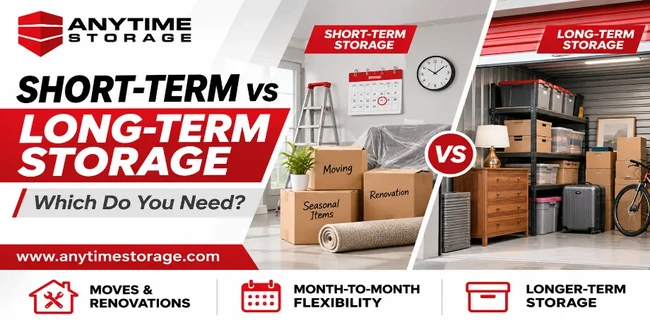
The right storage option usually comes down to one question: how long do you actually need the space? Short-term storage covers a few weeks to a few months and works well for moves, renovations, and temporary overflow. Long-term storage runs six months or more and fits ongoing needs like downsizing, seasonal rotation, or a growing amount of business inventory. Here is how to tell the two apart and pick the one that fits your timeline and your budget.
What Counts as Short-Term Storage?
Short-term storage generally covers rentals of a few weeks up to about six months. It is built around flexibility. Most facilities, rent month to month, so you are not locked into a long lease for a need that will pass in a matter of weeks.
Common reasons people choose short-term storage:
- You are moving between homes and need a few weeks of overlap.
- A home renovation means furniture and boxes need to be out of the house temporarily.
- You are staging a home for sale and want it show ready.
- A college student needs somewhere to keep belongings between semesters.
- Your business has a short-term overflow of inventory or equipment.
What Counts as Long-Term Storage?
Long-term storage is anything you expect to keep in place for six months or longer, sometimes for years. The unit still rents month to month in most cases, but the planning looks different. You are choosing a unit size and unit type that will hold up to extended use, not just a quick move.
Common reasons people choose long-term storage:
- You are downsizing to a smaller home and are not ready to part with certain furniture.
- You only need seasonal items, like holiday decorations or sports equipment, part of the year.
- A military move or deployment means household goods need somewhere to stay for months.
- Your business needs steady, ongoing space for inventory or equipment.
- You want more room at home without giving up belongings you plan to use again.
Short-Term vs Long-Term Storage: Key Differences
How Lease Terms and Pricing Typically Differ
Because most self storage rentals are month to month, the real difference between short-term and long-term storage is less about the contract and more about planning. A short-term renter usually books the closest available unit and moves out as soon as the project wraps. A long-term renter benefits from thinking ahead: choosing a unit size with a little room to spare, deciding whether climate control is worth the added cost for the specific items being stored, and asking the facility whether a longer commitment qualifies for a reduced rate.
Tips for Choosing the Right Option
- Estimate your timeline honestly. If there is a real chance a short-term move will stretch past six months, price it out both ways before committing.
- Match the unit to what you are storing, not just how long you are storing it. Furniture and electronics benefit from climate control regardless of rental length.
- Ask about month-to-month flexibility so you are never locked into paying for space you no longer need.
- Keep an inventory of what goes into the unit. This matters even more for long-term storage, where it is easy to forget exactly what is in the back of the unit after a year.
Find Short-Term or Long-Term Storage With Anytime Storage
Whether you need a unit for six weeks or six years, Our storage locations offer month to month unit rentals, so your lease can match your timeline instead of the other way around. Find a location near you and compare current unit sizes and starting rates before you book.